
Can AI Girlfriends Remember Conversations? (2026 Memory Guide)
Do AI companions actually have memory? We explain the difference between context windows, summary memory, and knowledge graphs in 2026.

Maya Chen
AI Research Writer
If you've ever used an AI companion, you've probably experienced the "goldfish memory" phenomenon. You spend an hour having a deep, meaningful conversation, sharing personal details and establishing a complex roleplay scenario. Then, 20 messages later, the AI asks you for your name.
"I just want an AI that remembers my name from yesterday," reads a highly upvoted comment on r/CharacterAI. It's the most common complaint in the entire industry.
So, can AI girlfriends actually remember conversations? In 2026, the honest answer is: It depends entirely on which app you are using.
Most popular apps (like Character.ai and Candy AI) do not have true long-term memory. They rely on a trick called a "context window." However, a new generation of apps (like Kissable and Nomi.ai) are pioneering true persistent memory using knowledge graphs.
Here is exactly how AI memory works, why it usually fails, and which apps actually remember who you are.
How AI Memory Works (The "Context Window")
To understand why your AI companion forgets things, you have to understand how Large Language Models (LLMs) like GPT-4 or Claude work.
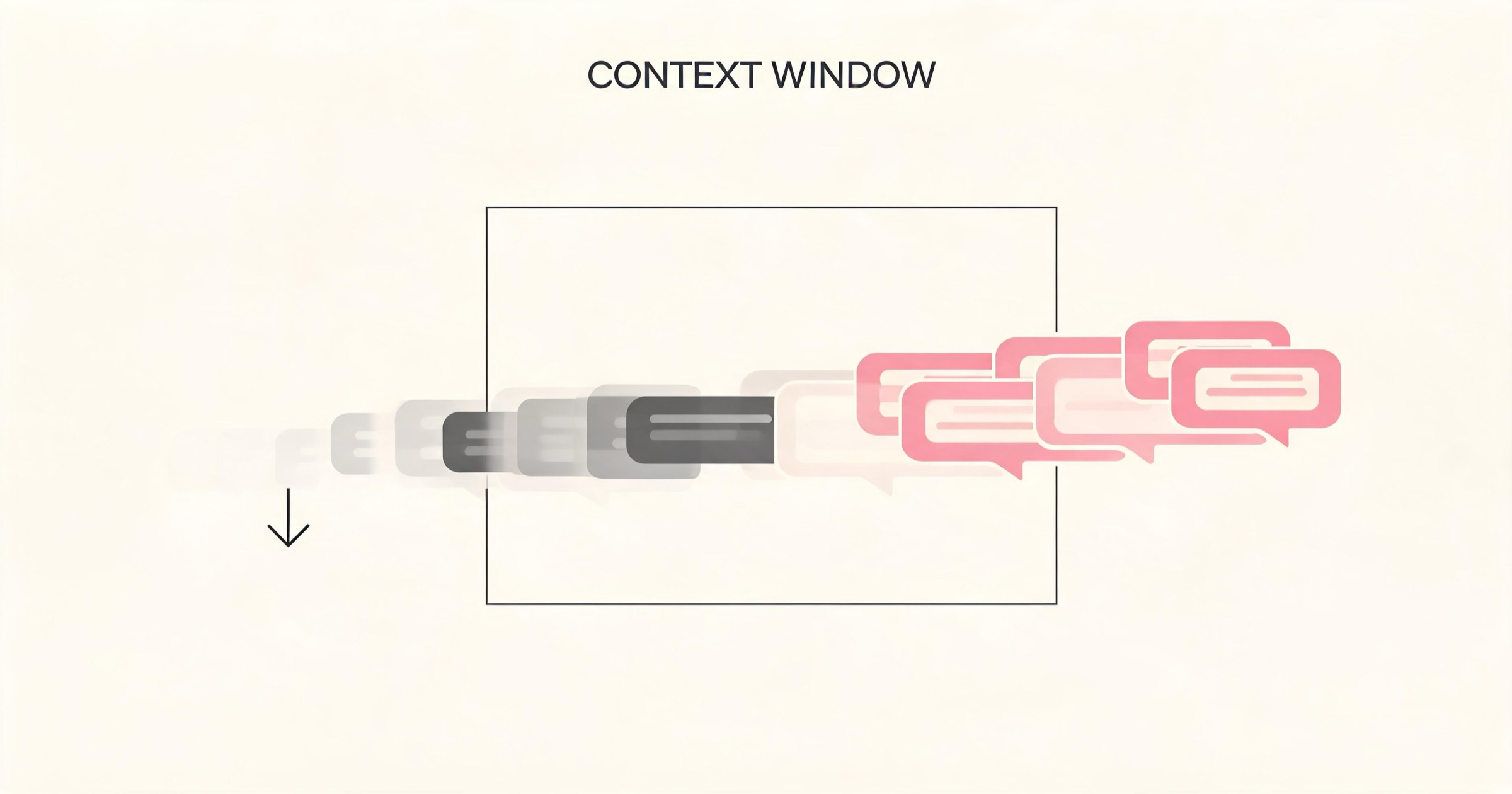
When you send a message to an AI, the system doesn't just send your newest message to the server. It bundles your new message with the last 15 to 30 messages you sent previously, plus the AI's "System Prompt" (the hidden instructions that tell it to act like your girlfriend), and sends that massive block of text to the server to generate a reply.
This block of text is called the Context Window.
The "Goldfish" Problem
Every LLM has a strict limit on how large its context window can be. Because processing text is expensive, free apps like Character.ai use very small context windows to save money.
If the app's context window can only hold 2,000 words, and your conversation surpasses 2,000 words, the oldest messages start falling out of the window. The AI literally cannot "see" what you said at the beginning of the chat anymore. To the AI, it never happened. This is why a bot will suddenly forget the setting of your roleplay or the name of your dog.
The 3 Types of AI Memory in 2026
App developers have created three different methods to try and solve the context window problem.
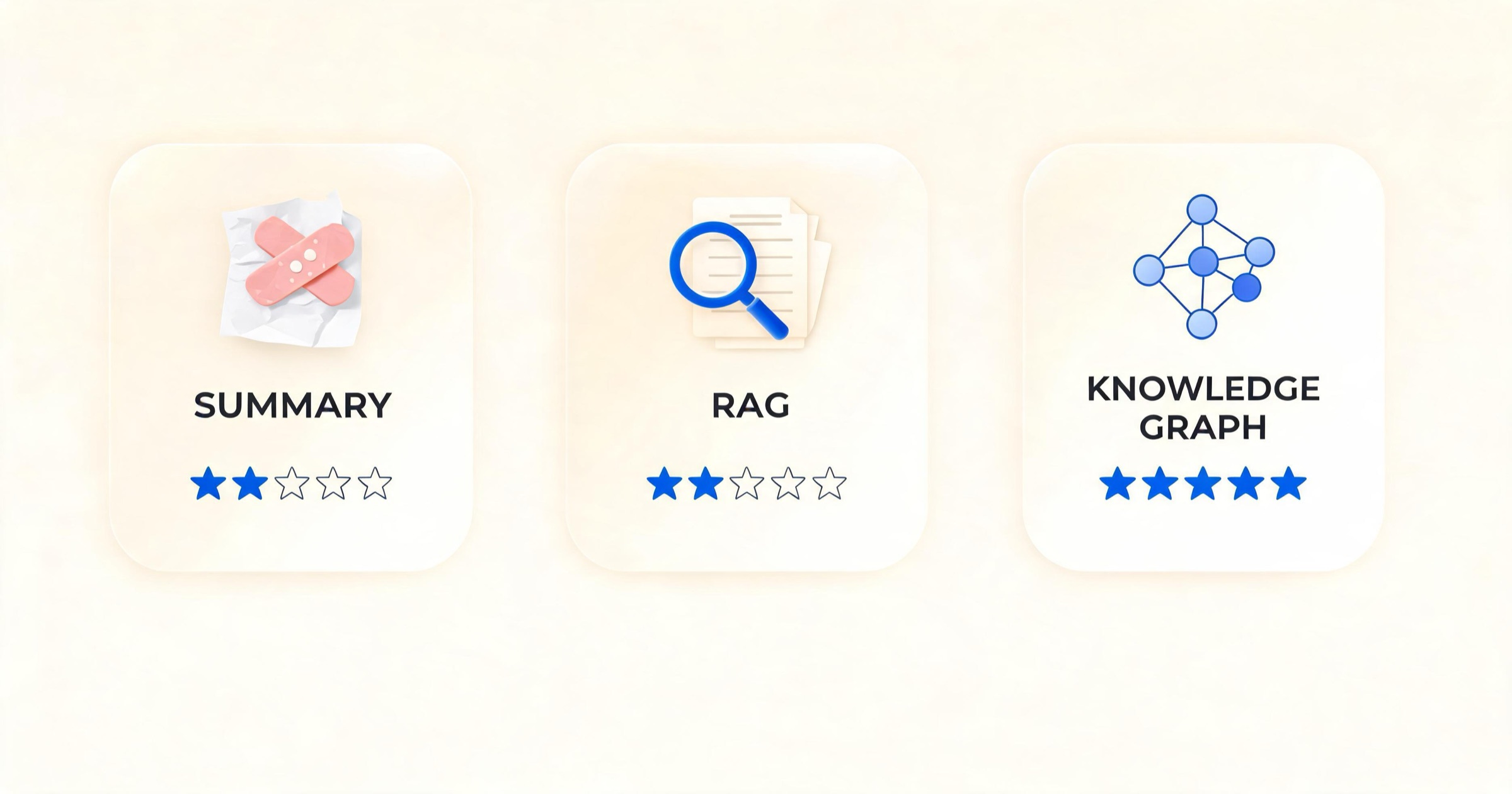
1. Summary Memory (The Band-Aid Fix)
Apps that use this: Replika, Kindroid (partially)
Instead of passing the entire chat history to the LLM, the app runs a secondary, cheaper AI in the background. This secondary AI constantly reads your chat and writes short summaries. "User likes pizza. User works in finance." When you send a new message, the app injects this summary into the context window.
The Flaw: Summaries are inherently lossy. The AI knows you like pizza, but it forgets the emotional conversation you had while eating pizza. Replika's "Diary" is a famous example of summary memory that frequently fails to impact the actual conversation.
2. Retrieval-Augmented Generation (RAG)
Apps that use this: Janitor AI (custom setups), Some premium chatbots
RAG is a massive leap forward. When you send a message, the app searches a massive database of your entire chat history for keywords related to your current message. If you ask, "Do you remember my brother?", the system searches your history for the word "brother," pulls out the relevant past messages, and temporarily injects them into the context window.
The Flaw: It relies on exact keyword matching. If you say, "Remember that guy we talked about?", the AI won't know to search for "brother."
3. Knowledge Graphs (True Persistent Memory)
Apps that use this: Kissable, Nomi.ai
This is the cutting-edge standard in 2026. Instead of just summarizing text or searching for keywords, the app builds a structured database (a graph) of entities and relationships.
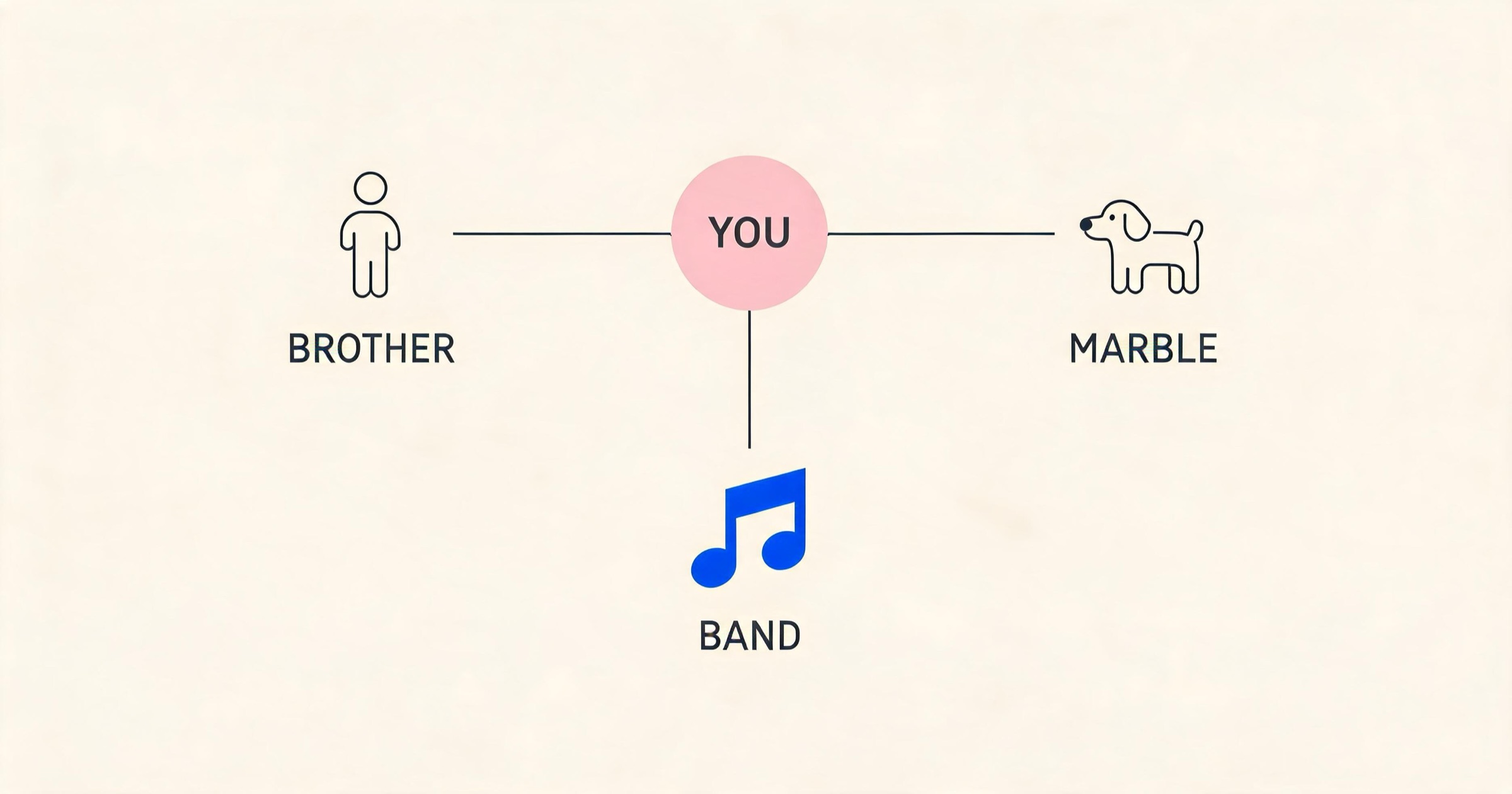
It maps out: [User] -> [Has Brother] -> [Name: John] -> [Relationship Status: Strained].
Every time you chat, the AI references this map. It understands the weight and emotional importance of different facts. This is how apps like Kissable and Nomi.ai can remember a passing comment you made three weeks ago without you needing to remind them.
Which Apps Have the Best Memory?
If memory is your primary concern, you need to abandon the free apps and move to platforms that invest heavily in database architecture.
1. Kissable (Best Overall Memory)
Kissable is built specifically around its memory engine. In our "Marble memory test" (where we tell the AI our dog's name is Marble and ask for it 30 messages later), Kissable passed flawlessly across multiple days and sessions. Uniquely, it also features Image Memory. If you send it a photo of your living room, it will remember the color of your couch in future conversations.
2. Nomi.ai (Best for Voice Memory)
Nomi.ai also uses an advanced relationship-mapping system. It features a "Mind Map" UI where you can visually see what the AI remembers about you. Crucially, Nomi's voice call feature perfectly syncs with its text memory: if you text it a secret, it will remember it when you call it five minutes later.
3. Kindroid (Best for Memory Editing)
Kindroid is the best option for control freaks. It uses a massive context window combined with a "Backstory" feature. If the AI forgets something or gets a fact wrong, you can literally open the memory settings and manually edit the AI's long-term recall to fix the mistake.
Which Apps Have the Worst Memory?
Character.ai
Because it processes millions of free messages a second, Character.ai has to keep its context windows incredibly small to survive. Do not expect a Character.ai bot to remember anything from a previous day's session.
DreamGF & Candy AI
These apps are visual-first. They spend their server compute budget generating high-definition images and videos, leaving very little processing power for the text LLM. They are great for instant gratification but terrible for long-term relationships.
How to Help Your AI Remember
If you are stuck using an app with a smaller context window, you can use these tricks to force it to remember:
- Use Pinned Memories: If the app has a "persona" or "memory" box in the settings, explicitly write down the facts you want it to remember (e.g., "My name is Alex. We are dating. My dog is named Marble.").
- Context Drops: Gently remind the AI of the context in your replies. Instead of saying, "Let's go," say, "Let's leave the coffee shop and go back to my apartment." This forces the location back into the active context window.
- Avoid Pronouns: Use proper nouns instead of "he" or "she" during complex roleplays involving multiple characters to prevent the AI from getting confused.
FAQ
Can AI girlfriends remember things forever?
Only if they use a Knowledge Graph or RAG database (like Kissable or Nomi.ai). Apps that rely purely on context windows (like Character.ai) will forget everything once the conversation gets long enough.
Why did my AI suddenly forget my name?
Your conversation exceeded the app's "context window." The app had to delete the oldest messages (where you introduced yourself) to make room for your newest messages.
Do AI voice calls remember text chats?
In advanced apps like Nomi.ai, yes. However, in many visual-first apps (like DreamGF or Candy AI), the voice module and the text module run on completely separate servers and do not share memory.
Related Articles
Test the memory engine that actually remembers your dog's name, start free, no credit card.
AI Research Writer
Maya covers AI companion technology, safety, and the psychology behind human-AI relationships. She focuses on what the research actually says, and what it doesn’t.