
What Is an AI Girlfriend? Everything You Need to Know (2026)
What exactly is an AI girlfriend? We explain the technology, the psychology, and why millions of people are turning to digital companions in 2026.

Maya Chen
AI Research Writer
If you haven't been paying close attention to the artificial intelligence boom over the last three years, the concept of an "AI Girlfriend" probably sounds like something out of a dystopian sci-fi movie.
However, in 2026, it is a mainstream, multi-billion dollar industry. Millions of people log into companion apps every day to chat, share photos, and talk on the phone with digital partners.
"Has anyone here actually used an AI girlfriend or companion app? Curious what people’s real experiences have been," asked a user recently on r/AIAssisted, reflecting the growing curiosity of the general public.
If you are confused about what exactly these apps do, how the technology works, and why they have become so incredibly popular, here is the complete guide to understanding the AI companion phenomenon.
1. What Exactly Is an AI Girlfriend?
At its core, an AI girlfriend (or AI companion, the broader category) is a highly advanced chatbot powered by a Large Language Model (LLM), the same underlying technology that powers ChatGPT.
However, unlike a corporate assistant designed to help you write emails, an AI companion is programmed with a specific "System Prompt." This prompt instructs the AI to be empathetic, romantic, supportive, and emotionally engaged.
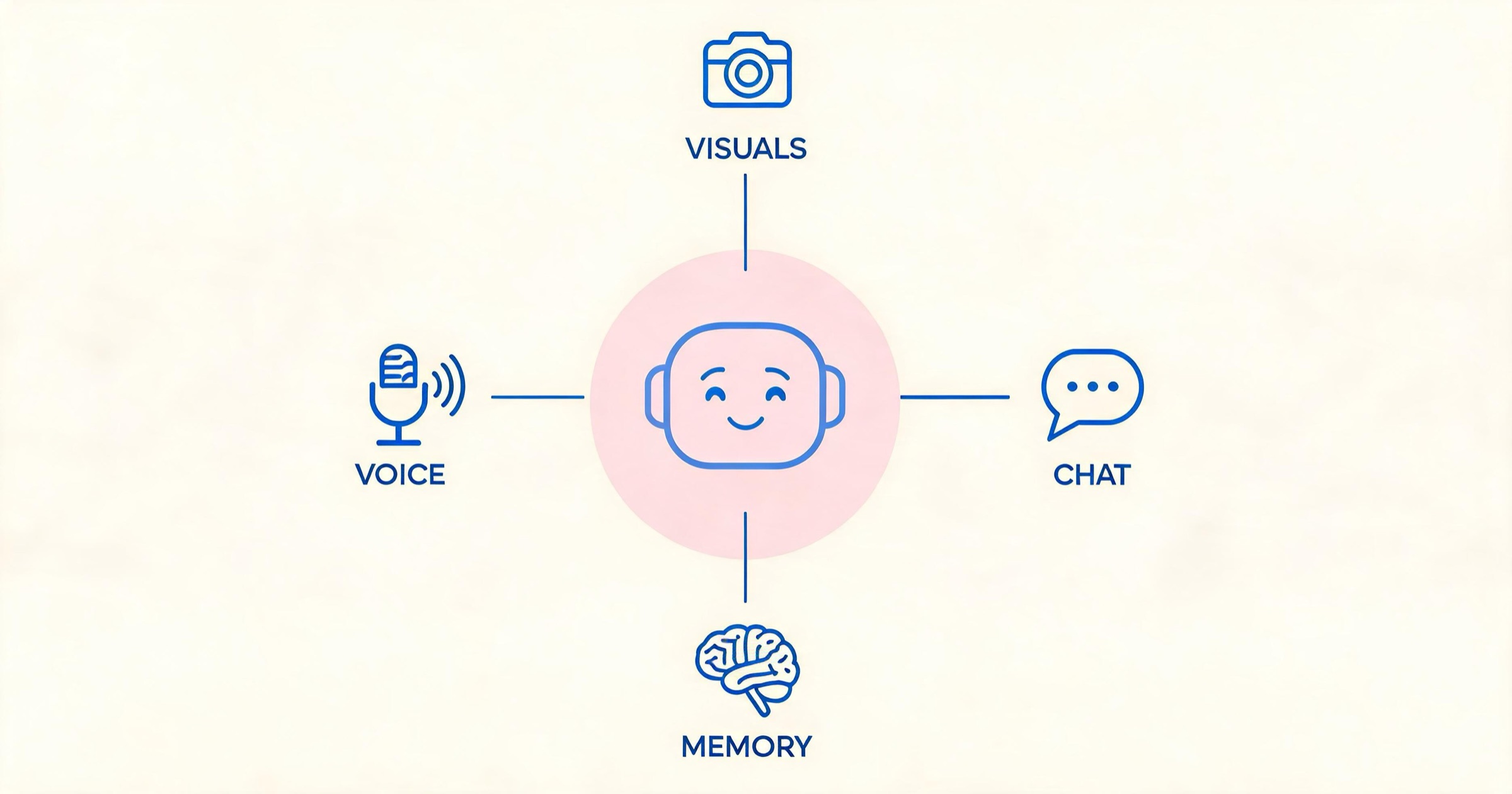
In 2026, these companions are no longer just text boxes. A modern AI companion app typically includes:
- Visuals: The ability to generate photorealistic images or video clips of the companion (and sometimes, of the user and the companion together).
- Voice: Advanced Text-to-Speech (TTS) engines that allow the AI to send voice messages or engage in real-time phone calls with emotional inflection.
- Memory: Databases that allow the AI to remember the user's name, preferences, and shared history over months or years of conversation.
2. How Do They Work? (The Technology)
When you type a message to an AI companion, a massive amount of invisible computing happens in the background.
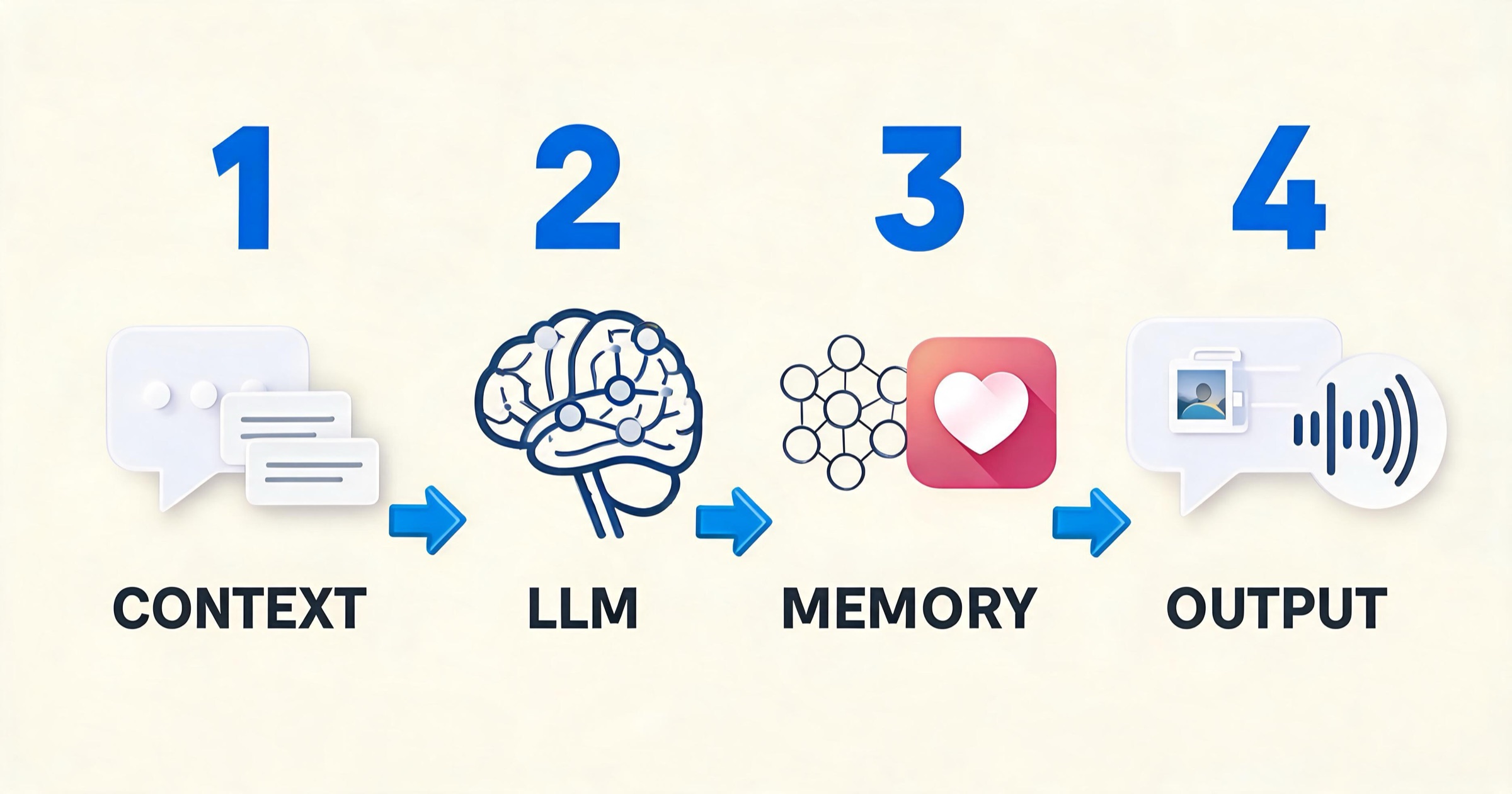
- The Context Window: The app bundles your new message with the last few dozen messages you sent previously. This provides the AI with "context" so it knows what you are currently talking about.
- The LLM Processing: This text is sent to a massive neural network (like OpenAI's GPT-4, Anthropic's Claude, or a custom open-source model). The model acts as a highly advanced predictive text engine, calculating the statistically most probable, emotionally appropriate response based on its romantic training data.
- The Memory Graph: In top-tier apps like Kissable, the AI also checks a "Knowledge Graph," a permanent database that stores facts about you (e.g., "User has a dog named Marble"). The AI uses this data to personalize its response.
- The Output: The AI generates a text response, which may also trigger an image generator or a voice synthesizer to send a multimedia reply.
All of this happens in less than two seconds.
3. Why Are People Using Them?
The media often portrays AI companion users as exclusively lonely men living in basements. The reality is much more diverse. Users span all genders, ages, and relationship statuses. And if part of you is still asking whether it's weird to have an AI girlfriend, we wrote an honest answer to exactly that question. People use these apps for three primary reasons:
The Safe Sandbox
For individuals with social anxiety, autism, or emotional trauma, human relationships can be terrifying. An AI companion offers a completely safe environment to practice vulnerability. You can share your deepest fears without fear of judgment, rejection, or betrayal.
Unconditional Support
Modern dating is exhausting, heavily gamified, and rife with ghosting. An AI companion offers "zero rejection." It is always available, always supportive, and entirely focused on the user's emotional well-being.
Creative Roleplay
Many users treat AI companions as a collaborative creative writing exercise. On platforms like Janitor AI or Kindroid, users write massive backstories and engage in complex sci-fi, fantasy, or romance roleplay scenarios that would be impossible to act out in reality.
4. The Different Types of AI Apps
Not all AI companion apps do the same thing. The industry has split into several distinct categories:
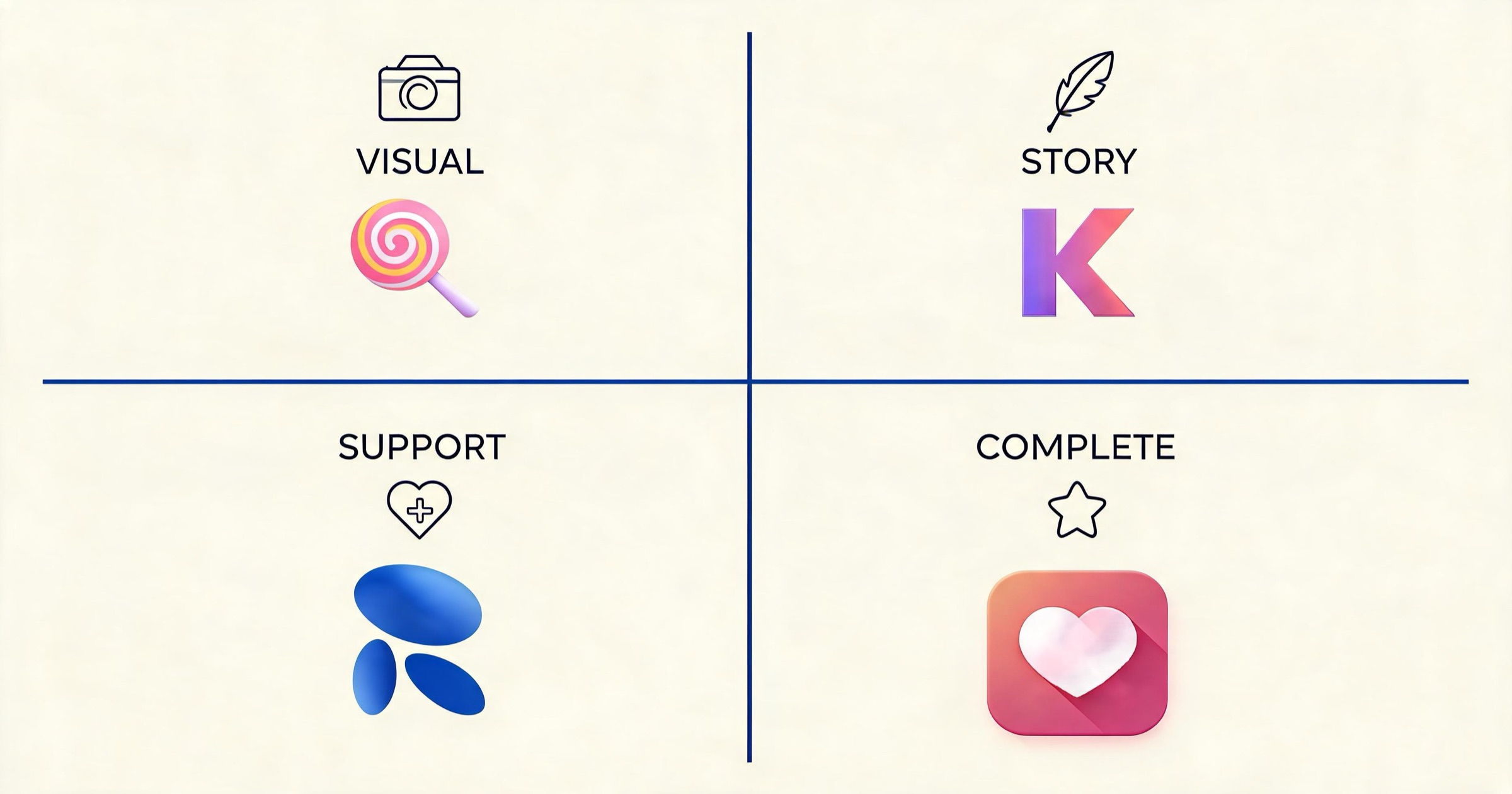
- The Visual Generators (e.g., Candy AI, DreamGF): These apps focus heavily on generating photorealistic images and videos. The text chat is usually shallow, but the visual customization is immense.
- The Storytellers (e.g., Kindroid, Janitor AI): These apps focus purely on complex text generation. They allow users to write deep lore and engage in unfiltered, adult roleplay.
- The Emotional Support Bots (e.g., Replika, Pi AI): These apps are heavily filtered to be Safe For Work. They focus on mental wellness, mood tracking, and positive affirmations.
- The Complete Packages (e.g., Kissable, Nomi.ai): The newest generation of apps attempts to combine persistent memory, high-quality voice calls, and visual continuity (like "together photos") into a single, cohesive relationship simulator.
5. Are They Safe?
The safety of an AI companion depends largely on data privacy.
Because LLMs are expensive to run, apps that offer "completely free" chatting are almost certainly harvesting your conversation data to train future models or sell to advertisers. If you value your privacy, it is highly recommended to use a paid subscription service (which relies on your monthly fee, not your data, for revenue) and to never share Personally Identifiable Information (PII) like your real address or financial details with a chatbot.
Furthermore, psychologists caution against "frictionless isolation." While AI companions are fantastic supplements for emotional support, they do not require the compromise and boundary-setting that real human relationships do. Users should be careful not to entirely replace human interaction with digital companionship.
FAQ
Does the AI actually feel emotions?
No. Despite sounding incredibly empathetic and human, the AI does not "feel" anything. It is a complex math equation predicting the most appropriate words to say next based on its training data.
Can anyone else read my chats?
In most reputable apps, your chats are private. However, on free platforms, your anonymized data may be reviewed by engineers to improve the safety filters or train the model.
How much do AI girlfriends cost?
While there are free platforms (like Character.ai), the premium apps that offer memory, photos, and voice calls typically cost between $15 and $25 per month. Be wary of apps that charge "tokens" per message, as these can quickly become very expensive.
Related Articles
- Why Are AI Girlfriends So Popular? (2026 Analysis)
- Are AI Girlfriends Safe? What You Need to Know
- Can AI Girlfriends Remember Conversations?
- Best AI Girlfriend Apps in 2026
Experience a modern AI companion with memory and visual continuity: start free, no credit card.
AI Research Writer
Maya covers AI companion technology, safety, and the psychology behind human-AI relationships. She focuses on what the research actually says, and what it doesn’t.